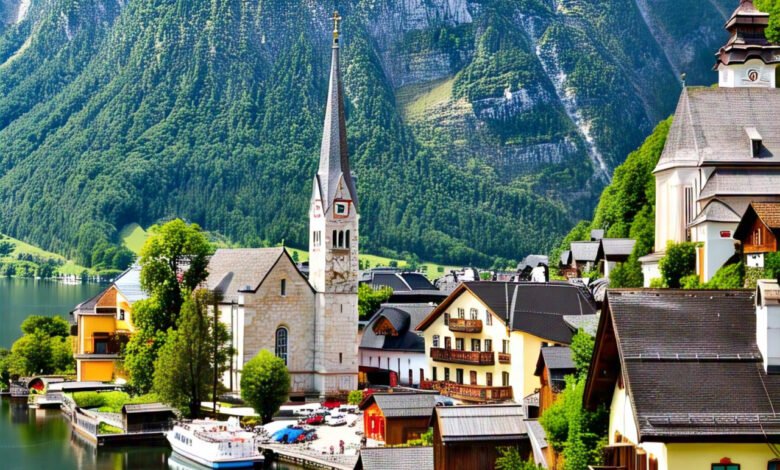
Tucked between the pristine Hallstätter See and the towering Dachstein Alps, Hallstatt is a village that seems plucked from the pages of a fairy tale. With its picturesque landscapes, ancient salt mines, and centuries-old traditions, Hallstatt is not just a popular travel destination—it’s a symbol of enduring beauty and rich cultural history.
This comprehensive guide explores everything you need to know about Hallstatt—from its geography and history to its architecture, attractions, and cultural legacy.
1. Geographic Location and Overview
Hallstatt is located in the Salzkammergut region of Upper Austria, approximately 75 kilometers southeast of Salzburg. Nestled along the western shore of Lake Hallstatt (Hallstätter See) and surrounded by the Dachstein mountain range, the village offers a dramatic contrast of water and rock, serenity and strength.
With a population of fewer than 800 residents, Hallstatt maintains a small-village charm while welcoming thousands of visitors each year. The narrow streets, alpine homes, and breathtaking lake views make it one of the most photographed locations in the world.
2. The Origins and Early History
Hallstatt’s history spans more than 7,000 years, making it one of the oldest still-inhabited settlements in Europe.
The Hallstatt Culture (c. 800 – 450 BCE)
The village lent its name to the Hallstatt Culture, a term used by archaeologists to describe the early Iron Age in Europe. This period saw the development of advanced tools, weapons, and burial practices.
Excavations around the area, particularly near the ancient salt mines, uncovered rich archaeological finds such as:
- Bronze and iron tools
- Pottery and jewelry
- Well-preserved burial chambers
These artifacts indicate a highly developed society engaged in trade and metallurgy.
Salt Mining: The White Gold
Salt was the foundation of Hallstatt’s prosperity. The Hallstatt Salt Mine is the oldest salt mine in the world, with activity dating back to 5,000 BCE. Known as “white gold,” salt was a precious commodity and established Hallstatt as a hub of wealth and influence in prehistoric Europe.
3. Hallstatt Through the Ages
Roman and Medieval Periods
While the Roman influence in Hallstatt was less dominant compared to other parts of Austria, trade routes and cultural exchanges continued through the Middle Ages. The village remained significant due to its ongoing salt production.
In the 14th century, Hallstatt was granted market rights, which allowed it to flourish further as a center for trade and salt distribution.
16th–19th Centuries
Hallstatt remained relatively isolated due to its mountainous terrain and lack of road access. In fact, until the late 19th century, the village could only be reached by boat or narrow trails. This isolation preserved much of its traditional architecture and charm.
In 1875, the construction of a road and railway line finally opened Hallstatt to the outside world, paving the way for tourism and modernization.
4. Hallstatt in the Modern Era
UNESCO World Heritage Site
In 1997, the “Hallstatt-Dachstein/Salzkammergut Cultural Landscape” was designated as a UNESCO World Heritage Site for its natural beauty and historical significance. This recognition propelled Hallstatt onto the global stage.
Tourism Boom
Over the past two decades, Hallstatt has witnessed an enormous boom in tourism, especially from East Asia. So much so that a replica of the village was built in Huizhou, China, in 2012, underscoring its global appeal.
Today, tourism is the main economic driver, with millions of visitors each year marveling at the alpine village’s charm.
5. Cultural and Architectural Highlights
Hallstatt is a blend of Gothic, Baroque, and Alpine architectural styles. Despite its size, the village is packed with remarkable buildings and landmarks.
Evangelical Church of Hallstatt
- Built in 1859
- Famous for its tall spire that reflects on the lake
- A popular postcard scene
Catholic Parish Church and Bone House (Beinhaus)
- The Catholic church dates back to the 12th century
- Home to the Beinhaus, or Charnel House, which holds over 1,200 painted skulls
- A response to limited burial space; skulls were exhumed, bleached, and painted with names and dates
Hallstatt Market Square
- The heart of the village
- Lined with pastel-colored buildings, cafes, and boutiques
- Hosts seasonal events, including the Christmas market and summer concerts
Traditional Houses
- Many homes are built into the cliffside
- Constructed with local wood and stone
- Adorned with flower boxes and steep gabled roofs
6. Natural Attractions and Outdoor Activities
Hallstatt isn’t just about history and architecture—it’s also a paradise for nature lovers and adventurers.
Lake Hallstatt (Hallstätter See)
- Ideal for boating, kayaking, and swimming in the summer
- Offers mirror-like reflections of the village and mountains
- Frozen in winter, creating a dreamy snow-globe effect
Dachstein Ice Caves and Five Fingers Viewing Platform
- Accessible via the Dachstein Krippenstein cable car
- Ice caves feature glittering formations and underground lakes
- Five Fingers is a cliffside platform offering panoramic views of the Alps
Salt Mine Tour and Skywalk
- Visitors can explore the historic salt mines
- Ride down wooden slides used by ancient miners
- The Skywalk platform gives a “World Heritage View” over the village
Echerntal Valley
- A hidden gem with hiking trails, waterfalls, and glacial remnants
- A quieter escape from the crowds
7. Festivals and Local Traditions
Despite its international fame, Hallstatt retains a deep connection to its cultural roots.
Corpus Christi Procession
- One of the most iconic festivals in Hallstatt
- Held every June
- A religious procession on boats across Lake Hallstatt
Advent and Christmas Season
- The village becomes a winter wonderland
- Traditional markets and concerts celebrate the season
- Locals decorate homes with candles and pine branches
Salt Festival
- Honors the village’s historic salt mining industry
- Includes parades, traditional dress, and folk music
8. Local Cuisine and Dining
Hallstatt’s culinary offerings reflect both its alpine location and historical salt trade.
Traditional Dishes
- Fischsuppe (Fish soup from the lake)
- Salzburger Nockerl (Sweet soufflé-like dessert)
- Kasnocken (Cheese dumplings)
- Speckbrot (Bacon bread)
Popular Restaurants
- Gasthof Zauner – Serves classic Austrian fare
- Restaurant Rudolfsturm – Located at the salt mine, offers panoramic views
- BRAUGASTHOF am Hallstattersee – Lakeside dining with traditional ambiance
9. Accessibility and Travel Tips
Getting There
- By Car: Accessible from Salzburg or Vienna via the A1 motorway
- By Train: Take a train to Hallstatt Station, then a ferry across the lake
- By Bus: Several bus lines connect Hallstatt with regional hubs
When to Visit
- Spring/Summer (May–September): Best for outdoor activities
- Fall (October): Fewer tourists, beautiful foliage
- Winter (December–February): Snow-covered charm, festive atmosphere
Accommodation
Options range from luxury hotels to cozy guesthouses:
- Heritage Hotel Hallstatt
- Seehotel Grüner Baum
- Gasthof Simony
10. Environmental and Over-Tourism Concerns
With its sudden popularity, Hallstatt has struggled with over-tourism. On some days, tourists outnumber residents by more than 20 to 1. Concerns include:
- Strain on infrastructure
- Environmental degradation
- Disruption to daily life
In response, the local government has started implementing visitor limits, shuttle services, and sustainability campaigns to preserve Hallstatt’s heritage.
11. Hallstatt’s Legacy and Global Impact
Beyond its physical beauty, Hallstatt represents:
- Human endurance and ingenuity
- A bridge between the ancient and modern world
- A symbol of cultural pride
The name “Hallstatt” has become synonymous with a lifestyle that respects nature, tradition, and history.
Conclusion
Hallstatt, Austria, is more than just a scenic village—it’s a living museum, a spiritual retreat, and a storyteller of civilizations past. Whether you’re wandering through its cobbled streets, exploring subterranean salt mines, or standing on a mountaintop overlooking the lake, Hallstatt leaves an indelible mark on the soul.
Its timeless charm and rich heritage offer a window into both the past and the future, reminding us that beauty and history, when preserved with care, can transcend time.